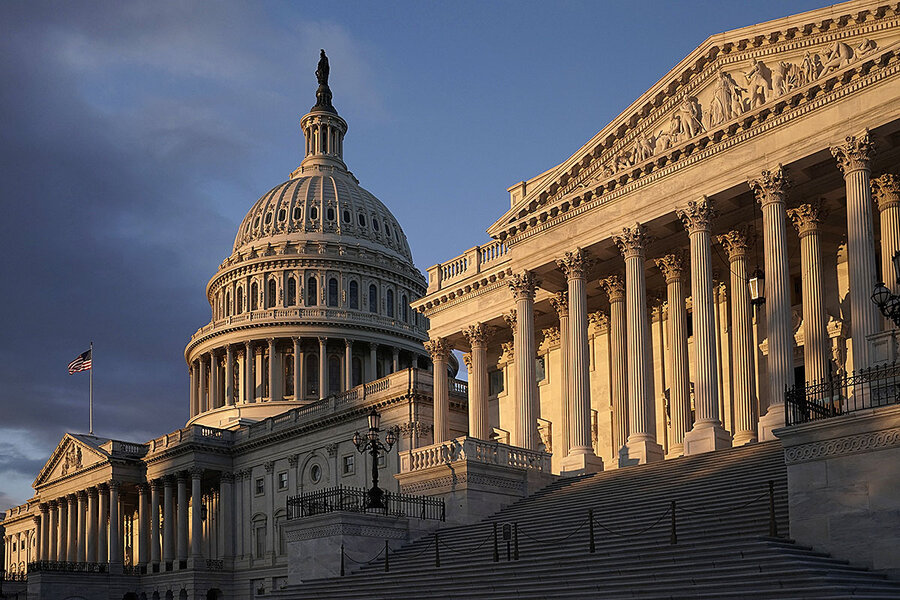
The US Congress gained some noteworthy ground this meeting with regards to information protection, yet cybersecurity stays a vulnerable side for administrators.
Congress as of now is thinking about a national security law that mirrors enactment sanctioned in the European Association. It would permit individuals to get to, right and solicitation the erasure of the individual data gathered from them. In spite of the fact that there are a few thoughts with regards to the last structure the bill should take, a way turned out to be clear during the Senate Business Advisory group's security hearing a month ago.
Congress likewise appears to address the outcomes of new innovations. A month ago it passed the National Quantum Activity Act, which is relied upon to scatter US$1.275 billion for quantum look into throughout the following four years. Some have contended that this freshly discovered eagerness for tech may be utilized to fix the denunciation procedure.
With regards to cybersecurity, however, Congress is still in obscurity ages. Endeavors to pass a protection law regularly are viewed as tending to the two information security and cybersecurity, yet actually, they don't. Organizations and buyers have been compelled to assume control over issues, reflected in the ongoing declaration that Facebook has restricted deepfakes, and the rising utilization of VPNs among everyone.
Protection Makes no difference Without Security
This oversight regarding security could have gigantic ramifications for the adequacy of information protection enactment. Despite the fact that information protection and information security are isolated worries, there is an inborn connection between them. Security has been neglected in the current proposed law, just as in comparable enactment - like Europe's GDPR and the Australian protection bill spent two years back.
To see how protection and security are connected, consider an application that gathers area information from its clients. The sorts of information security law proposed (or as of now in power) would force exacting prerequisites on the organization behind this application, for example, mentioning to its clients what it is gathering, and what it does with the information. On the off chance that the application isn't appropriately made sure about, notwithstanding, and the data is taken or released, solid protection approaches will be of little solace to clients.
This oversight is obvious in practically all the enactment on information security in the U.S. The Data Straightforwardness and Individual Information Control Act, which was presented in the House the previous spring, contains an entry that requires administrators and tech organizations "to shield purchasers from awful entertainers in the protection and security space," however it does exclude any further subtleties. The Shopper Online Security Rights Act goes somewhat further, however just two of its 59 pages give ambiguous cybersecurity prerequisites for privately owned businesses.
Indeed, even the US Customer Information Security Demonstration of 2019 gives just the wide guidance that organizations should "keep up sensible regulatory, specialized, and physical information security approaches and practices to ensure against dangers to the privacy, security, and honesty of delicate secured information."
An Absence of Administration
Best case scenario, the disappointment of Congress to handle cybersecurity has left the information of a great many Americans unprotected. Best case scenario, it speaks to an absence of administration that has left mindful organizations totally confounded with respect to what their lawful, good and moral obligations are with regards to securing client information.
Right now, has grown a tremendous and unregulated market for cybersecurity instruments and administrations, each professing to offer class-driving insurance against cybercrime. For organizations, site security is currently a significant segment of site upkeep costs. This is on the grounds that Presidents are intensely mindful of the dangers of cybercrime, a type of culpability that will cost the worldwide economy $6 trillion every year by 2021, as per Cybersecurity Adventures' yearly report.
Indeed, even the National Security Organization has cautioned that cybercriminals are "turning out to be progressively complex and proficient consistently in their capacity to utilize the Web for odious purposes." Yet numerous organizations neglect to avoid potential risk, for example, erasing terminated records.
What's to come
To be reasonable for Congress, creating an information security law that covers each privately owned business is intricate. Today, information is probably not going to be held by one organization in one spot, and appointing obligation regarding ensuring it has become a troublesome issue. Any such law, in this way, would need to consider the far reaching appropriation of distributed storage, SaaS plans of action, and different types of circulated information stockpiling and handling. Right now, justifiable that most state-level laws on information security require organizations just to take "sensible" security rehearses, without determining what those are.
Then again, there at long last appears to be a craving in Congress to address these issues. An expanding number of information insurance laws spread individual enterprises, for example, human services and money related foundations, and the FTC has brought a few information break related requirement activities under its generally feeble and ambiguous shopper security powers.
Looking to the future, these industry-explicit laws could shape a great model for a national information insurance law, as could state-level enactment. The state most referenced right now New York, which apparently has the most extensive prerequisites. Monetary administrations organizations in the state must meet in excess of 10 explicit necessities, which incorporate encryption of nonpublic data, entrance testing, defenselessness evaluations, and oversight of specialist co-ops' cybersecurity.
New York likewise offers another exercise for Congress. So as to draft and order the new law, the state met a specialist board that united administrators, cybersecurity experts, and the Chiefs of significant organizations.
The advancement of a powerful information assurance law at a national level will require a similar degree of aptitude and counsel. This is the reason some have recommended that a government Branch of Cybersecurity is the route forward. Such a division could unite obligations that presently are divided over a colossal number of offices.
Coming up short on even an essential sign from the administration with respect to what establishes sufficient cybersecurity, numerous individuals are assuming control over cybersecurity. VPNs - security devices that encode client information in travel - are encountering dangerous development. Only a couple of years prior, they were viewed as semi-lawful apparatuses that empowered buyers to get around Netflix geo-squares or maintain a strategic distance from cryptographic money bans. Presently, they are utilized by a critical extent of the masses.
Whatever the result of these new administrative activities, information insurance is never again an issue that Congress can disregard. Securing shopper information is significant for the economy. At the broadest level, guaranteeing information security is likewise basic to the adequacy of information protection enactment that as of now has been passed. In other words nothing of the notoriety of Congress, which would be seriously harmed on the off chance that it ought to neglect to take initiative on one of the most significant issues confronting the U.S. today.
Comments
Post a Comment